Tip of the Month: Hive dive! For many, this is the time of year you want to get into the hive and see what they are doing in your brood boxes. Whether to test for mites or not is up to you, and you have testing options. Treatment options are also wide and varied, from extended-release oxalic acid strips to FormicPro 1 or 2 pad treatments, and many more. Depending on your treatment, you may also be feeding your bees (the recipe posted on the club’s website). For your bees . . . Happy (a nice hive to live in), Healthy (mite/disease control), and Heavy (food stores approx. 100 #) going into winter could lead to spring success.
Queen Management
Mite Management
Honeybee Feeding Sugar Recipes
Max’s Minute 2026-08-12
And we are rolling through the beekeeping season as if it were fast-forwarded. Beekeeping is an experience, a journey, full of ups and downs, successes, and times when you may wonder what the bees are trying to tell us. If you’re having success, please share what’s working. If you are not, don’t get frustrated and throw in the hive tool! If you need a hand, a second set of eyes, or just need an ear to bend, please connect with your colony of beekeepers within the club. Your success is our success! If you need to borrow extracting equipment, please contact Len Arsenault at 781-698-6036 or lenarsenault54@gmail.com.
Tip of the Month: Labor Day is a classic time of the year for us to stop harvesting honey. This year it falls later, on the 7th, and many beekeepers will stop harvesting a week or more before the holiday to allow the colony to pack away as many resources as possible before the winter.
2026 DCBC Wayne Stenzel Memorial Scholarship
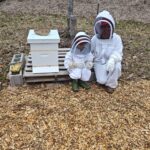
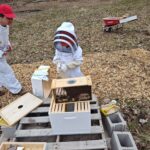
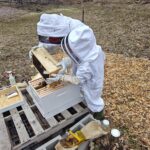
Max’s Minute 2026-05-16
PROGRAM CHANGE! Instead of the Social Hour meeting time for this Tuesday’s meeting (May 19th), Max will demonstrate a Hive Split at 5:30P at the Crossroads Apiary.
Max’s Minute 2026-04-28
Last chance for ordering Georgia bees will be Wednesday evening (04/29).
Options are 2 and 3 lb packages and nucs. All will have Italian pol-line queens.
If you plan to split your overwintered hives and need a new queen Max can pick those up as well.
Most breeds will be available including the pol-line queens.
Max’s Minute 2026-04-14
California package bees should arrive in Sullivan on April 25th.
Georgia package bees should arrive in Sullivan on May 3rd.
Nucs most likely will be on the late delivery shipment.
Max is still able to take orders if you need more packages or nucs.
Max will have pollen patties available at pick up.
When Max has the packages in hand, he will contact you by text for times to pick up bees!
Honey Bee Swarming by Dr Bill Meyer
- 1
- 2
- 3
- …
- 12
- Next Page »


